
Florence County Probable-Cause Warrants
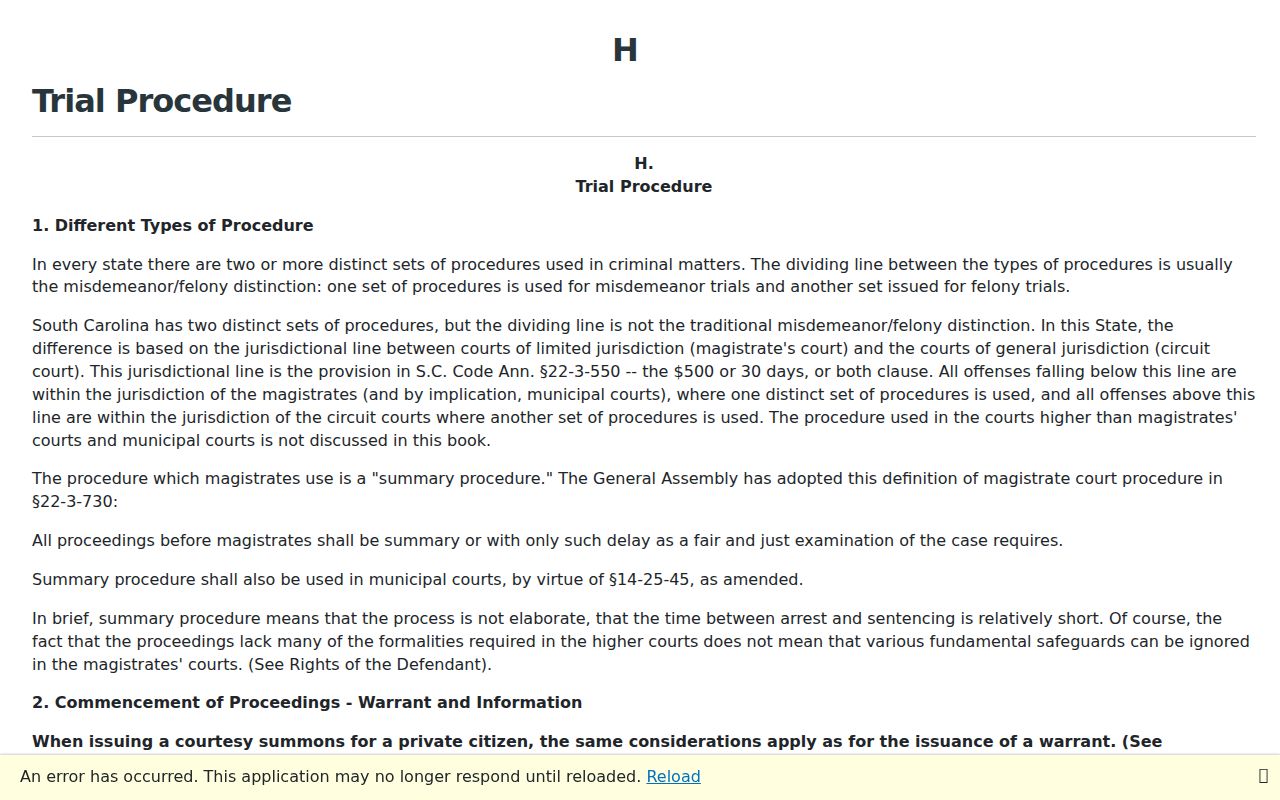
In South Carolina, an arrest warrant usually starts with a complaint signed under oath. A magistrate then checks two things: whether the complaint states an offense and whether the facts add up to probable cause. Meet that test, and the judge can issue written process. That is the standard lower-court route in Florence County, laid out in the Summary Court Bench Book and S.C. Code Title 22, chapter 5. A bench warrant works differently. It pulls someone back into a case that already exists. So a Florence County reader asking about service, bond, or recall should first pin down which court issued the order. The South Carolina Magistrate Court Bench Book walks through the complaint and probable-cause steps in full.
In Florence County, issuance is the court's act; the serving agency handles a separate piece of the process.
How Arrest Warrants Work in Florence County
The judge or magistrate who signs a Florence County arrest warrant stays tied to the court record and the complaint behind it. Felony matters tend to run through General Sessions and the solicitor's process. Lower-court matters often begin with magistrate practice instead. The order authorizes custody on its own terms. It does not decide the whole case. Once issued, the warrant may go to the sheriff, city police, or another authorized agency to serve. Any bond decision, release condition, or later appearance rests with the court, not the serving officer. If a search turns up a possible match, verify the court and case number directly rather than trusting an abbreviated public card.
Florence County Arrest Warrant Review
A complaint or affidavit gives the judge the facts to review. The court record may show the charge, the date, the issuing judicial officer, and whether bond is set or waits for a later hearing. City police investigations can feed into magistrate or municipal process. Felony matters follow the circuit and solicitor path instead. Florence County publishes no single intake form and no complete warrant-number format. One caution on form names. The search-warrant form SCCA513 covers property or evidence searches, not arrests. The family SCCA412 form handles support or order matters, another distinct process. Sharing the word "warrant" does not make them the same thing.
Arrest Warrants: What They Contain
A court file often holds more than the Sheriff's Office public card shows. Sealed, juvenile, family, and investigative material may stay limited. The fields here describe a safe schema, not a promise that every field appears online. Florence County publishes no public warrant-number pattern.
| Case or warrant number | COURT-YEAR-SEQUENCE Schematic only; no local format was published. |
|---|---|
| Named subject | Protected identity fields may appear in court forms; do not reproduce them. |
| Charge or order | The complaint or court order names the matter under review. |
| Issuing judge and court | Shows which clerk and judge control the case. |
| Bond | May state a bond or refer the matter to a later bond hearing. |
| Date and return | May show when the order issued and whether service was attempted or completed. |
Florence County Warrant Service Roles
The Sheriff's Office runs a Warrant Unit and a central public roster. Florence Police and other city departments may serve process tied to their own jurisdictions. Magistrate and municipal courts keep their own case files apart from all of that. A tip line or non-emergency number is not a status desk. FCSO's published law-enforcement contact is 843-665-2121, but the issuing court remains the best place to confirm whether a warrant is active. Booking questions go elsewhere: the Florence city court page routes callers to the Sheriff's Law Enforcement Center. A city ticket usually starts with the municipal clerk instead. Each channel answers a different question, so pick the one that matches yours.
How Warrants Get Served in Florence County
The sheriff serves process countywide. Florence Police, Lake City Police, Timmonsville Police, Pamplico Police, and other local agencies also serve within their roles. A 2026 Johnsonville notice describes a police-service transition involving FCSO, so verify current routing there before you count on any one office. No dedicated 24-hour warrant-confirmation line exists. No published surrender entrance does either. After an arrest, booking and bond processing follow. Bond Court sits at 120 Courthouse Square. Release timing and conditions still depend on the charge, any holds, and the judge, so call first before deciding where to appear.
Florence County Federal Warrant Route
A federal warrant is not a Florence County Sheriff's warrant. The U.S. District Court for the District of South Carolina keeps a Florence Division at the McMillan Federal Building. The U.S. Marshals Service serves as the primary federal warrant-serving authority. Federal dockets can be reached through PACER. But PACER is a court-record system, not a self-check roster of unserved federal warrants. Sealed complaints and warrant materials may not be visible at all. For a federal question in Florence County, call the federal clerk or your counsel rather than asking FCSO to certify anything. The federal court's Florence location page gives office details.
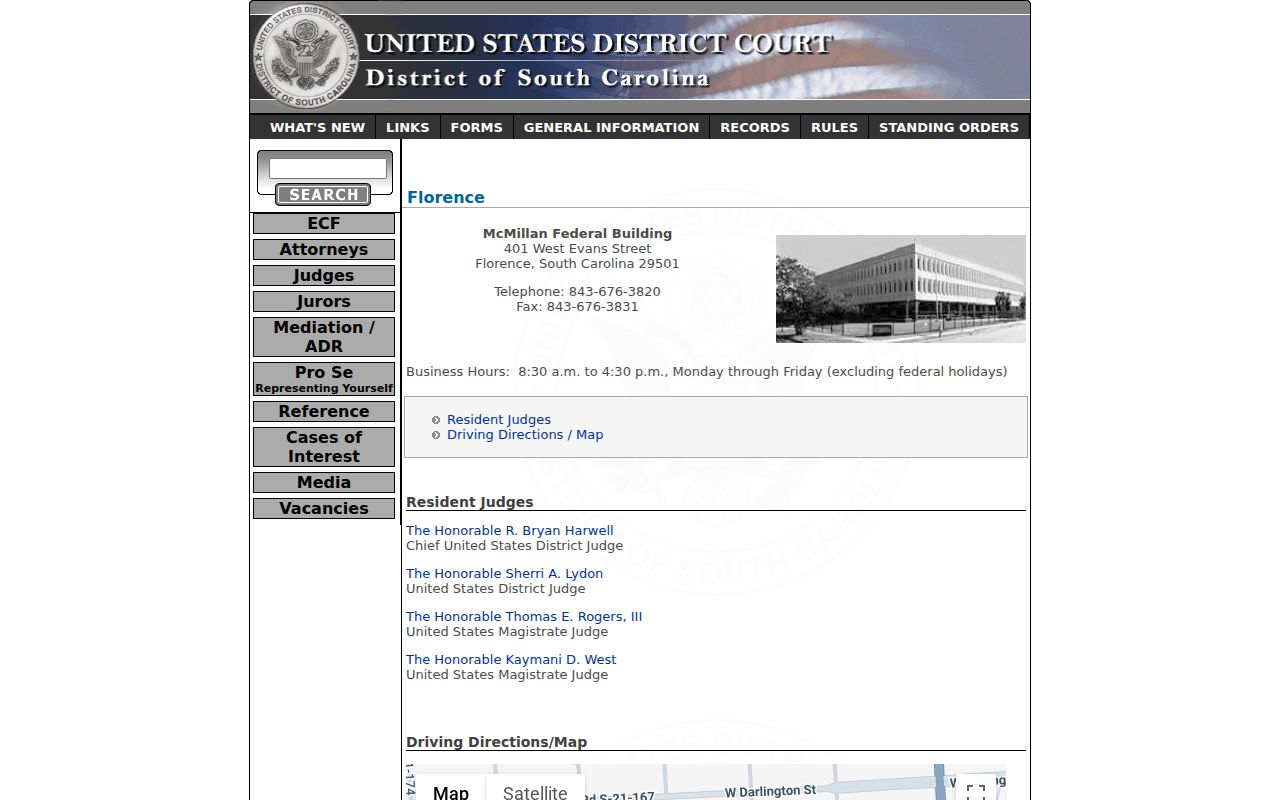
Federal process needs federal confirmation, and Florence County offices cannot supply it. For federal docket access, use the official PACER service; it is a court-record system, not a public roster of unserved warrants.
Ask the federal clerk or an attorney about sealed material and warrant status.
Arrest Warrants, Summonses, and Bench Warrants
South Carolina courts use more than one kind of paper. An arrest warrant comes after a probable-cause review. A courtesy summons just directs a person to appear without authorizing custody, while a bench warrant demands a court return. In Florence County, the document and the issuing clerk show which process applies. Missed a date? See the bench warrant process.
| Feature | Arrest Warrant | Summons | Bench Warrant |
|---|---|---|---|
| What it orders | Custody under the warrant | Appearance or response by a set date | Return before the court |
| Basis | Sworn facts and probable cause | Court or officer uses a summons process | Failure to appear or comply |
| Who issues it | Authorized judge or magistrate | Court or authorized officer | Judge handling the pending case |
| How to respond | Confirm service, counsel, and bond | Follow the notice and appear | Ask the issuing court about recall or reset |
Florence County Arrest Warrant Walk-Through
No Florence County office runs a universal walk-in surrender counter. There's no one-price bond or online recall form. Before appearing, ask the issuing court whether counsel can arrange a walk-through, whether bond is already set, and whether the person should report to the court, Bond Court, the Warrant Unit, or detention intake. FCSO headquarters posts no warrant-window schedule. After bond or court action, get the written order or receipt and confirm the next hearing. Ask when the sheriff roster should change. A bond can secure release without ending the charge.
Handling an Arrest Warrant in Your Name
Think an active warrant carries your name? Contact the likely issuing court and a South Carolina attorney right away. Ask for the case number, the charge, the service agency, and the bond status. Ask whether counsel can move to recall it. A public card may not list every charge. The Florence County Sheriff's Office routes service questions at 843-665-2121. An arrest, a bond, or a recall does not dismiss the underlying case, so once the court confirms the process, ask where to report and what ID to bring. Keep the order, the receipt, and the next court date.
Important: Do not travel to a courthouse or sheriff office based only on a web card; ask counsel and the issuing clerk for current instructions.